
Inspiring Older Readers
 posted on 14 May 2026
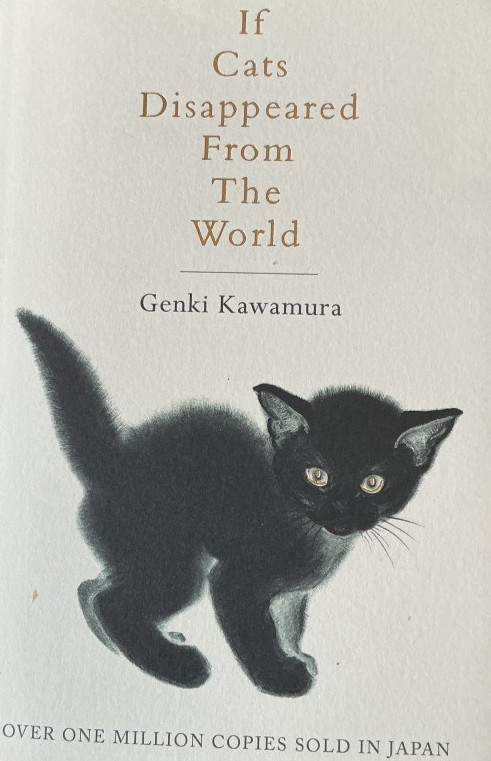
If Cats Disappeared From The World by Genki Kawamura
The emergence of a younger generation of Japanese novelists who are now having their work translated into English has become a real feature of the modern publishing landscape. Naturally enough when you get a wave of new books and authors coming along in a rush, not all of them will be successful. I’ve written elsewhere on this site that I’m a fan of Japanese literature and so I’m inclined to give them a try when they come along and catch my attention.
Genki Kawamura’s first novel, If Cats Disappeared from the World, translated in 2018 by Picador six years after its release in Japan, has earned some attention not just because the author is relatively young (in his mid-forties), sold massively in Japan, has been translated in plenty of other languages and comes from someone who has already earned kudos as a screenwriter, producer and director but because in what is a shortish novel of less than 200 pages, Kawamura takes us into a knotty philosophical conundrum and produces a scenario that will have you thinking well after you’ve finished reading.
When an (unnamed) young man who works as a postman and lives alone with his cat Cabbage – an animal he has a deep affection for and whose back story we will discover in more detail throughout the book – suddenly discovers he has an inoperable brain tumour that will kill him within days, he’s understandably knocked sideways. This sense of the world being turned upside down is further exaggerated when he returns to his small flat to find a mysterious figure has appeared claiming to be the devil. This devil looks exactly like the young man except in his drss sense, which is vulgar and flamboyant.
The devil offers the young man a deal: he will be given an extra day of life in exchange for which the devil will remove something of his choosing which is important in some way to the young man and the life he has lived. The young man immediately sees the significance of the offer – is extra life more important than the things he has come to love and need in his time on Earth so far?
First the devil removes phones from the world, then cinema, clocks and the final deal he offers is to remove cats. With each removal the young man is forced to think harder and harder about the difference between existence and life – if everything he has emotionally invested in disappears from the world can he really say he’s living or is he merely existing?
Each of the objects the devil removes has a story to tell about relationships the young man has had and the cat is particular unravels a deep and uncomfortable relationship with his parents.
Ultimately, this is a story about living a life conscious of those things that are important to you and giving them the time and care they deserve. The young man sees that confronting the things in life and relationships that we all tend to dodge is a vital part of appreciating the life you have to live. I’m conscious that this makes the book sound like it belongs in the self-help section of the bookshop or in that messy sentimental fiction that postures as ‘deep’ but which is actually facile but, on this occasion, the author has steered a skilful path along the edge without tipping over into either of those terrible genres. It is, I think, a genuine attempt to consider a really complex set of philosophical questions about what it means to be ‘alive’.
Available in paperback (the early editions have ‘French flaps’) and can be found for under £10.
Terry Potter
May 2026