
Inspiring Older Readers
 posted on 21 Jun 2026
Who is that book for?
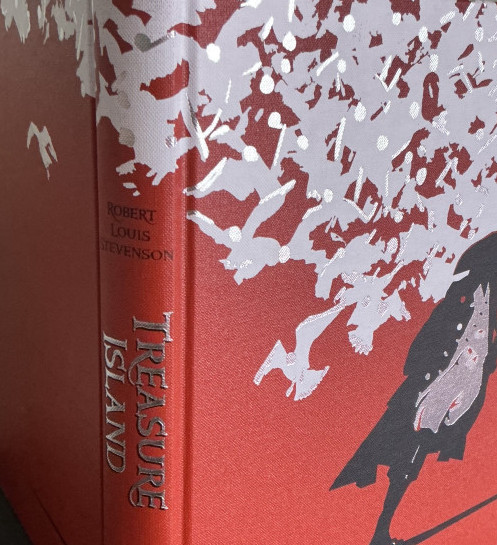
I recently picked up my copy of Robert Louis Stevenson’s novel, Treasure Island in the rather splendid Folio Society edition and found myself captured by Michael Morpurgo’s boundlessly enthusiastic introduction. I was delighted that this giant of the current children’s literature scene spent no time trying to convince me of Treasure Island’s iconic status as a ‘children’s classic’ nor did he spend any wasteful time recounting elements of the plot: no, his aim was to convey one key thing – the role this book played in opening up the way chapter books were something he could not only tackle for himself but disappear into as a world of escape and adventure. In crude modern colloquial terms, Treasure Island became the young Morpurgo’s gateway drug to the world of reading.
This started a chain of thought that has been buzzing around in my head for a while: how many current nine or ten-year-olds would find Stevenson’s adventure story accessible and rivetingly readable today? I can’t help but feel that the answer may be, not many. The language used might be a hinderance, for sure: any book from the late 19th century is certain to have both vocabulary and sentence structures which are unfamiliar to modern day readers. It’s also true that a book without significant female characters set in the world of pirates and desert islands will feel as if it’s got limited points of reference to draw on in the 21st century.
Without getting bogged down in arguments about technology, screens, diminishing concentration spans, the way schools destroy the pleasure of reading and other seemingly endless debates, what seems undeniable is that if only a small audience of young readers now exists for a book like Treasure Island (and probably plenty of other children’s classics of a similar vintage) then it must be a different audience (i.e. adults) who make it viable for a publisher like The Folio Society to produce beautiful, expensive copies of the sort I have in front of me.
This in turn has made me think about who are books written for? Does this highlight something that is, in fact, a universal truth – that authors write books and those books find their own audience without heed to the kind of rigid age delineations that publishers, marketers and book sellers seem to be most comfortable trying to shoe-horn everything into?
Are there really ‘children’s books’ or just books that might be read legitimately by children or adults? By calling a book like Treasure Island a ‘children’s classic’ are we mistakenly signalling to adults that it’s not for them: that they will be in some way infantilising themselves by picking it up by choice to read and enjoy? It seems instructive to me that, at the peak of the Harry Potter boom, Bloomsbury found it necessary to bring out editions with the so-called adult jacket variants because grown-ups didn’t want to be seen in public reading a ‘children’s book’.
Go into almost any bookshop and you’ll find the shelves strictly demarcated and labelled – ‘children’s books’ must never find their way onto the adult shelves and, in some cases, vice versa.
It’s my contention that our choice of reading is being artificially constricted by the creation of this bookshelf apartheid. Let’s break down the artificial wall between the children’s and the adult shelves and allow people to find the likes of Treasure Island alongside the other stories of adventure that everyone can enjoy regardless of age.
Terry Potter
June 2026