Inspiring Older Readers
 posted on 16 Jul 2026
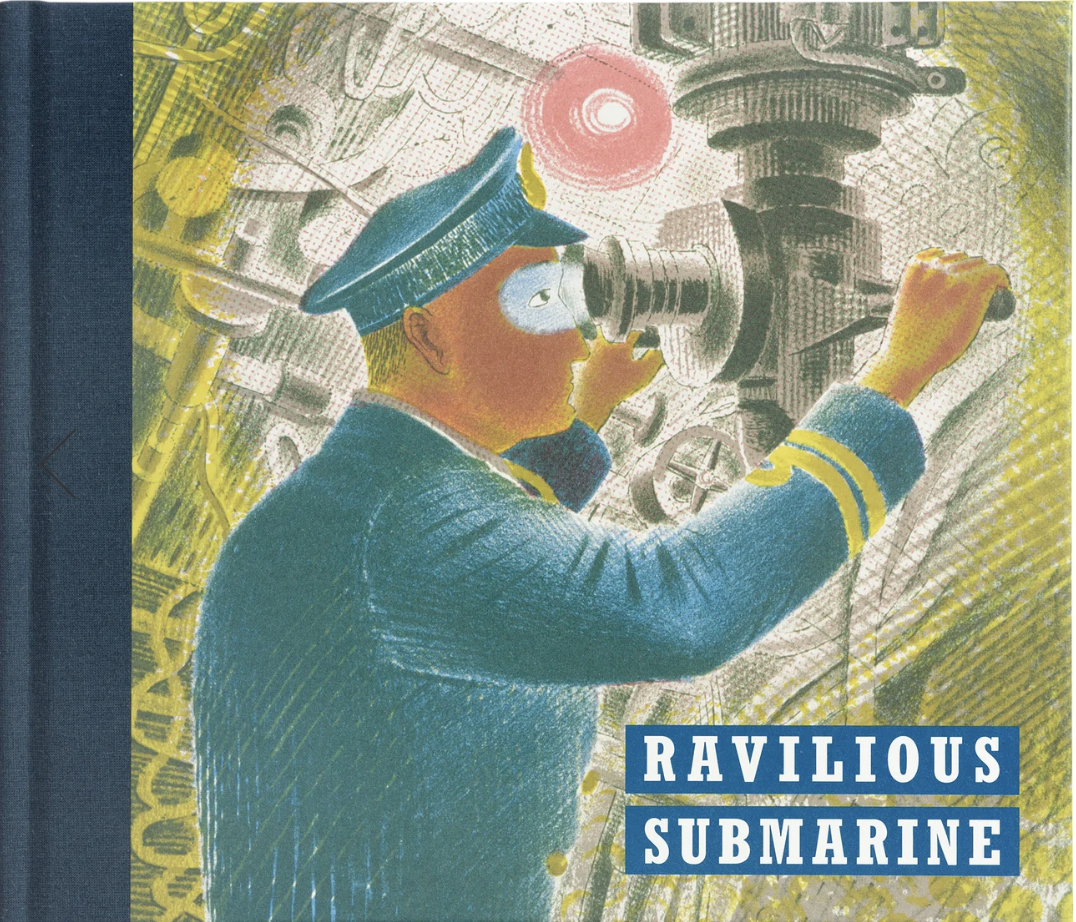
Ravilious: Submarine by James Russell
Over the past fifteen years or so the curator, lecturer and author James Russell has been at the forefront of Eric Ravilious scholarship, producing deeply informed but accessible books that have done a lot to widen audiences for this once neglected artist. Amongst our favourites have been those Russell has written for the small independent publisher, The Mainstone Press, which has gained a well-deserved reputation for its beautifully made books. Four of Russell’s earlier books have previously been reviewed on Letterpress (here).
Today we’re adding another – Ravilious: Submarine. In scarcely more than seventy pages this lovely book explains the wider context that would lead to Ravilious’s astonishing portfolio of prints simply called Submarine, in which he recorded life in the dangerous, claustrophobic environment of wartime submarines. But rather than simply presenting the ten prints that made up the series Russell chooses instead to set these works in their historical context and in doing so touches on advances in colour lithographic printing (and especially auto-lithography), the new advances in books for children coming out of revolutionary Russia and pre-war France, the founding of Allen Lane’s Penguin Books, the important role played by London Underground and Shell in commissioning modernist art during the 1920s and 30s, and of course the work of Ravilious and others of his circle as official war artists. I think he was right to take this approach because in their various ways all of these factors played an important part in Ravilious’s enthusiastic adoption of the auto-lithography process.
Now I will admit right from the outset that I am a technical dimwit in any number of areas and it turns out that one of these is printing. No matter how it is explained, I struggle to understand the processes. Or, to put it another way, I seem to find that all too often when printing techniques are explained they are explained for those who already have some familiarity with them – rarely for lay-people. And I think that may be the case with this book too. So while I am no closer to understanding how auto-lithography works, I did at least manage to grasp that one of its key advantages is that the artist works directly onto the stone surface (the ‘stones’) from which prints are pulled, thus giving him or her much greater control. It is also capable of greater sophistication in texture, tone and colour saturation. However, it also seems the case judging from what Russell says that these advantages probably couldn’t have been so readily grasped were it not for the willing help and co-operation of a small number of enlightened print-shop owners who worked alongside the artists who wanted to learn this process.
Anyway, auto-lithography was the technique Ravilious chose for his prints of the strange, unworldly interiors of the wartime submarine, and this may be because one reviewer (in The Times, I think) found his typically limpid, almost dream-like watercolour style mismatched with the first pictures he brought back from his official war artist duties in Norway. Perhaps Ravilious was smarting from this criticism and felt he needed a sleeker more modern style better able to capture the weird people-and-machine world he saw beneath the waves – the clanging turret steps and corridors and air-lock doors, the heat and cramped discomfort and the necessary camaraderie. I don’t know.
Had Russell chosen simply to present the ten Submarine prints it would have been a very short book indeed, but the additional context makes for deeply informative and engaging reading, rich in the kind of insights he is so skilled at and which bring Ravilious and his circle to life. He is especially good on the friendships and shared enthusiasms and collaborations that were such a feature of these artists.
If you are a fan of Ravilious, of James Russell’s scholarly but light and readable approach and perhaps most of all of beautifully produced books that still represent good value for money, then don’t miss Ravilious: Submarine. While ostensibly quite specialised in the particular aspect of the artist’s work it considers, it manages to be a much more generally informative book than one might anticipate. And like all of the Mainstone Press books that I have read, it is superbly printed and bound and a pleasure to handle and to own.
Alun Severn
July 2026
Eric Ravilious elsewhere on Letterpress:
Eric Ravilious – the Ravilious in Pictures series from Mainstone Press
Ravilious & Co: The Pattern of Friendship by Andy Friend
High Street by J.M. Richards and Eric Ravilious – What makes a book a cult object?
High Street by Eric Ravilious and JM Richards
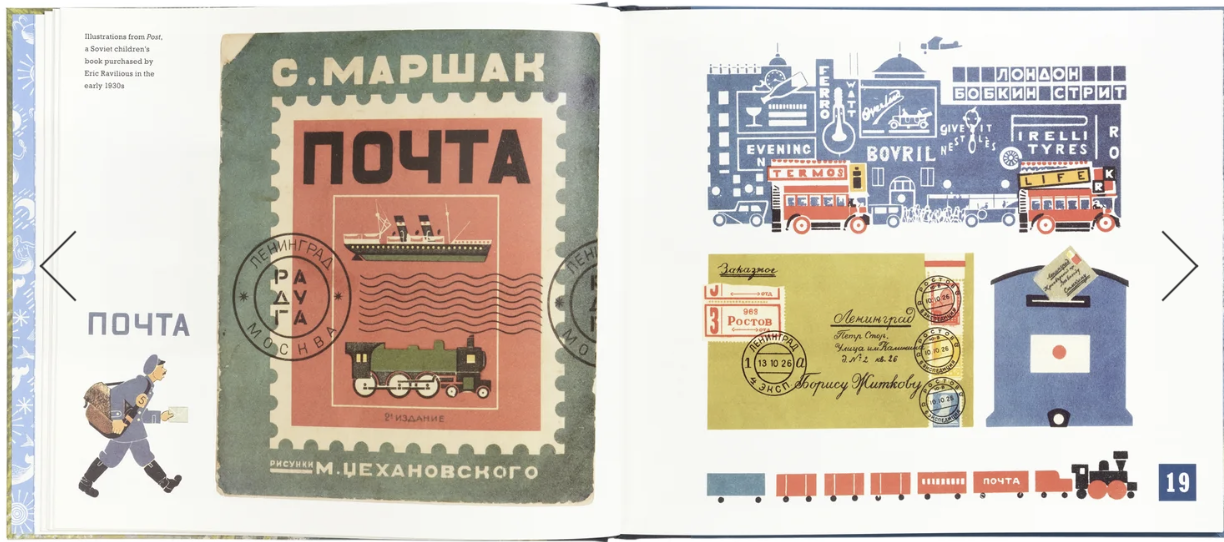
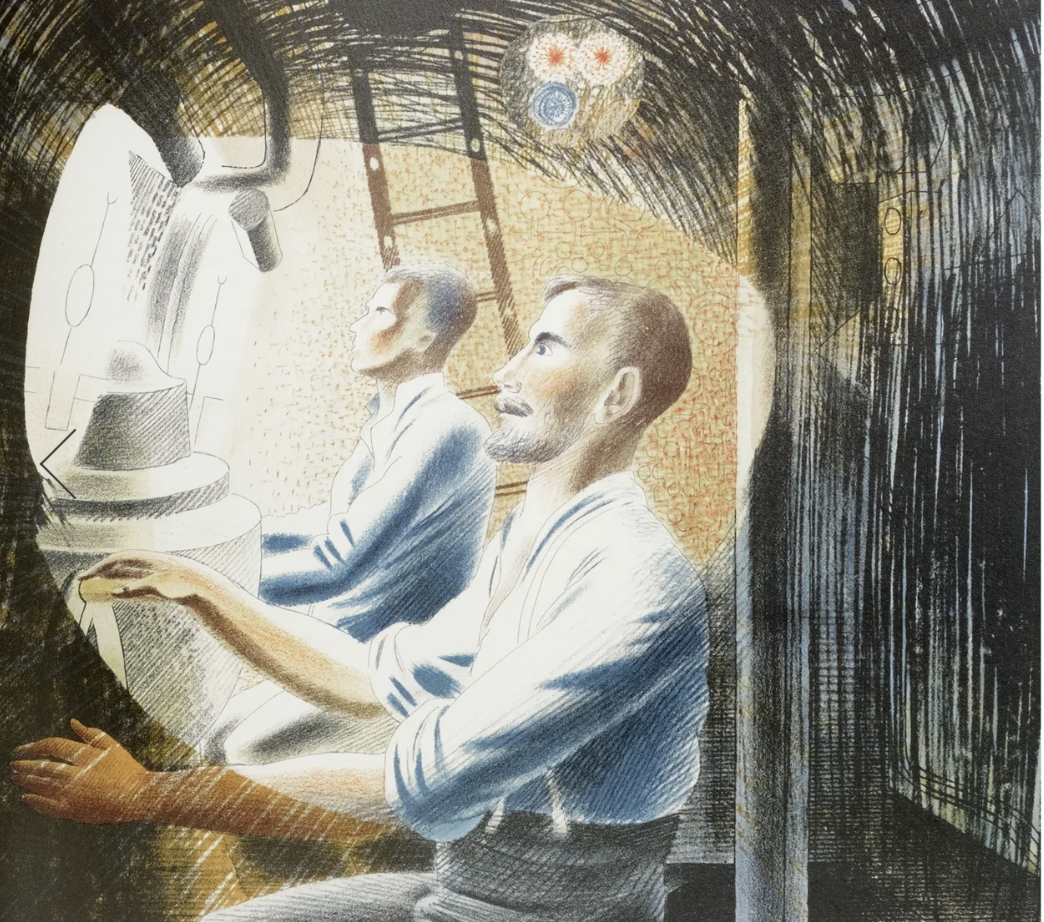
(Photographs by kind permission of The Mainstone Press)