Inspiring Young Readers
 posted on 16 Aug 2026
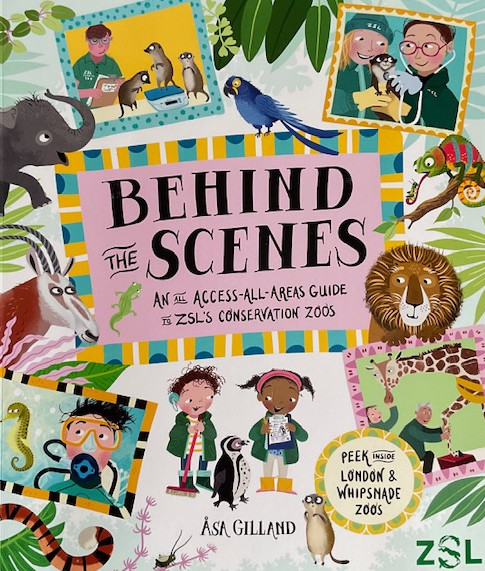
Behind the Scenes by Åsa Gilland
Many children and adults will have fond memories of visiting a zoo where they can marvel at unusual species and watch them emerging from their well-designed habitats. Apart from the wonder of seeing an animal in real time, there is so much information to digest about their country of origin, environment and feeding preferences. Having a book like this to follow up on some of this fascinating stuff will be a real boon for those who want to find out more. It focusses on London Zoo (first opened in 1828) and Whipsnade Zoo (the world’s first open zoological park which opened in 1931), but would be a great resource whether you have or have not visited either one. I first visited London Zoo about sixty years ago and can dimly remember being awe inspired by the African elephants looming above me whilst my three- year- old brother famously screamed ‘There’s a head on top!’ when his gaze followed up the neck of a giraffe. I was curious to get a flavour of what makes a zoo work smoothly these days and the many people who are involved with looking after the variety of animals.
The first thing to say is that the book is jam-packed with information that includes a potted history of the zoo and important detail about international conservation projects supported by the Zoological Society of London (ZSL). I loved the detailed maps at the beginning that show the variety of animals that are cared for in each place. The timeline gave me an insight into how the work of the zoos has evolved over time and the part that they have played in breeding, protection and preventing extinction of several species. There is a useful section about the daily life of a zookeeper and the range of specialist teams, some of whom live on site to ensure that animals needs are always met.
Children will be intrigued to learn about the many skills needed to build relationships with animals, for example, hippos are trained to open their mouths for teeth inspections and elephants are trained to blow into a bag so that vets can check for viruses in their snot! was interested in the section about treatment at the two vet hospitals on site which demonstrates the level of care and attention given to each animal that has its own medical record. As with the rest of the book, the plentiful, detailed illustrations add extra information and are well designed to engage the reader in different ways. I spent some time looking at the team of six veterinary specialists who were attending to a sedated giraffe. I could just imagine children speculating about how long it would take to carry out the procedure including potential hazards!
I strongly recommend this splendid non-fiction book that will inspire much classroom discussion and subsequent research. The author cites the contributions of various teams of ZSL scientists, researchers, conservationists, zookeepers and animal experts who have contributed to the range of information. Importantly, it is a book that will also extend the knowledge of many adults and perhaps cause them to reconsider the need to educate society about caring for the wider environment.
I hope that it will also help children who are interested in animals and conservation to consider a future career working in a zoo. As such, there is very useful and concise information about working with animals along with some practical ideas to contribute towards looking after local wildlife at the end of the book. Published by Templar Books, this informative book should be available to buy from your local independent bookshop who will gladly order it for you if not already on their shelves.
Karen Argent
August 2026