
Inspiring Older Readers
 posted on 30 Oct 2025
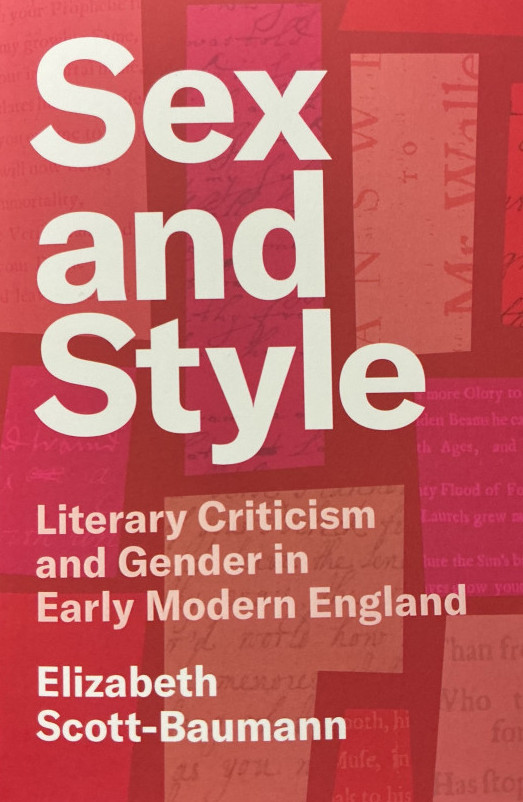
Sex and Style: Literary Criticism and Gender in Early Modern England by Elizabeth Scott-Baumann
Elizabeth Scott-Baumann is the reader in early modern literature at King’s College, London and in this study, she explores the origins in early literature of the sort of critical and descriptive language used to discuss and evaluate poetry. Thanks to the work of so many pioneering academics exploring the marginalisation of women in literary history, what she finds may not come as a surprise but her direct style and incisive analysis certainly makes you sit up and take notice.
In trying to capture what lies at the heart of this study, I can’t do much better than to quote from the author herself:
“This book is structured around five key gendered terms describing poetic style: Original; Feminine; Irregular; Smooth, and Soft. Each of these terms has a complex history in the early modern period, both in terms of its meaning for poetic practice, and of its freighting and gendered and sexualized connotations. With one of these terms as its starting point, each chapter will show how certain labels and styles were used to exclude women. It will also show how women were in fact forging or challenging these ideals alongside their male peers.”
Scott-Baumann demonstrates just how the use of certain critical terminology applied to poetical and literary output by predominantly male writers and critics of the time was deliberately styled to marginalise the work of women writers. And, on top of that, where, she asks, were the women literary critics and commentators of the day?
The answer she uncovers shows us convincingly that they were there but kept behind the curtain erected by the male counterparts. To illustrate the complexity and richness of the female critical voice, Scott-Baumann analyses the texts by women literary theorists, including Anne Southwell, Lucy Hutchinson, Katherine Philips, Margaret Cavendish, and Aphra Behn, setting them in a sort of dynamic tension alongside some of the key male poets of the time.
What we discover is that the gender assumptions of what makes the content of literature written by women ‘good’ is that it should be measured against words most associated with the female character – words like ‘soft’ or ‘smooth’, ‘regular’ or ‘easy’ and that these are benchmarks created by men for women not by women themselves.
In her conclusion the author makes this important point:
“By reading women as both highly inventive stylists and critics…and their poetry as a form of critical poetics, we gain a more diverse, more historically accurate, and more complex, picture of the history of criticism. When women poets get to be difficult or easy, regular or irregular, smooth or rough, soft or hard, original or imitative, and get to define what those terms mean, then we will have a richer history of literary criticism, and one which is more inclusive in its definitions of literary value, and of whose opinions matter.”
I won’t pretend that this will be a book for everyone but it will certainly be an essential read for students and academics interested in the whole discipline of literary criticism. As you would expect its superbly referenced and contains a thoroughgoing bibliography.
Available from Princeton University Press, you will be able to get a copy from your local independent bookshop – who will be happy to order it for you if they don’t have it on their shelves.
Terry Potter
October 2025