
Inspiring Older Readers
 posted on 06 Jan 2026
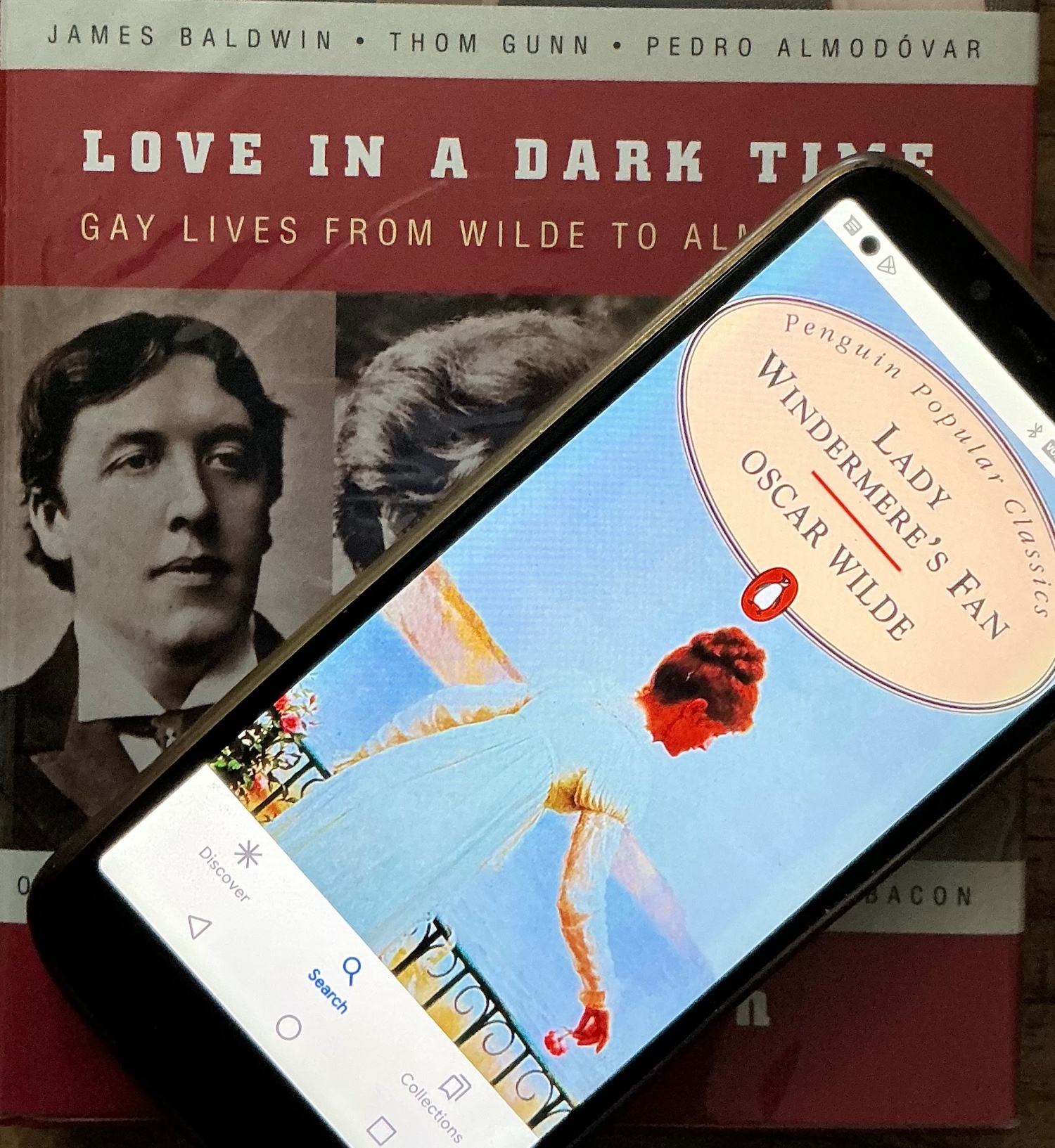
Lady Windermere’s Fan by Oscar Wilde
There was a period in the 1970s when I was obsessed with Oscar Wilde. I read the major plays, the short fiction and works for children, The Picture of Dorian Gray, some of the essays, and a little of the poetry. I devoured Phillipe Jullian’s biography. And then I progressed to that other key fin de siècle figure, Aubrey Beardsley. I pored endlessly over the marvellous Dover paperbacks of his outrageously erotic and mischievous line drawings and read the Stanley Weintraub biography which Pelican published in 1972.
But I’m not sure I ever really tried to read Wilde’s plays on their own terms, entering into the world they depicted and trying to understand them in historical context. I think I just saw them as brilliant comedies in which the language outshone all else. In any case, I was more interested in a sensationalist (and more or less entirely invented) world of decadence, perversity and rapier wit – part Beardsley, part Sherlock Holmes’s foggy gaslit London, part the suffocating lyricism of J. K. Huysmans’ Against Nature (review here) and part Wilde’s own shameless egotism.
But recently I reread Colm Tóibín’s masterly essay on Wilde in his collection Love in a Dark Time: Gay Lives from Wilde to Almodóvar and it prompted me to revisit Wilde’s Lady Windermere’s Fan.
I found it an extraordinary experience. Not least because I never go to the theatre and in addition was completely out of practice in reading plays on the page and the kind of imaginative effort that is required to translate them into action in one’s mind. And I must say I’m not sure I would have fully understood either the intricacies of Wilde’s staging or its meticulous care without the exemplary (but lengthy) notes that accompany the plays in the Penguin Classics edition.
Anyway, I won’t give the main points of the plot away because with the help of the notes I think I understood for the first time that the way the truth is gradually revealed in the play is vital to the mounting tension of its on-stage action. Suffice it to say that it is a play about the hypocrisy of Victorian public morality, the vilification of ‘fallen women’ and society’s policing ((usually by men) of the moral standards to which women should be held. If I ever previously understood this about the play, then I had entirely forgotten it.
Wilde lays bare the hypocrisy of his witty, cynical, upper class and often aristocratic characters, but if the drama went no further than this then I’m not sure Wilde would be as highly regarded as he is. For what is evident with closer reading, I think, is that Wilde intended his plays to be a mirror in which his audiences should see themselves. His aim, I believe, was that those gathered in London’s grandest theatres to watch his plays should feel themselves implicated in what unfolds on-stage, their own hypocrisies skewered as mercilessly as those of his characters.
As Colm Tóibín points out in his essay, the tragedy that unfolded for Wilde while he was at his triumphant peak – his scandalous affair with the Marquess of Queensberry’s son, Lord Alfred Douglas; the libel case Wilde brought against the Marquess and lost; and the two-year prison sentence with hard labour for ‘gross indecency’ which broke Wilde’s health, destroyed his reputation, almost certainly hastened the death of both his wife and his mother and which bankrupted him and left him reliant for what little remained of his life on a small allowance from his dead wife’s estate – means that his plays now resonate with additional (and sometimes terrible) meaning. And this seems especially true of Lady Windermere’s Fan.
While it may be a reductionist reading to now see Lady Windermere’s Fan as a howl of outrage against the criminalisation and ostracism of homosexual men in Victorian England, it seems impossible not to see the complex, morally ambiguous world of the play as having multiple interpretations – especially in its depiction of the sometimes ruthless, unflinching courage required of anyone who is forced to live outside the law.
For the first time I found myself reading an Oscar Wilde play and finding it not just witty but powerful, affecting, and genuinely thrilling. Wilde’s genius lay in the surgical precision with which he revealed social and moral hypocrisy – a quality that seems as relevant and as necessary now as it ever has been – but Wilde the man, whom I once admired uncritically, I now find harder to like. Even Tóibín seems to be critical of his conforming too readily to the myth of the ‘doomed, tragic queer’.
But I’m delighted that Tóibín’s essay sent me back again to Wilde’s greatest plays because I think they offer a wealth of reading that I have ignored for far too many years.
Alun Severn
January 2026
Oscar Wilde elsewhere on Letterpress:
The Picture of Dorian Gray by Oscar Wilde
The Ballad of Reading Gaol by Oscar Wilde with drawings by Arthur Wragg
Colm Tóibín elsewhere on Letterpress:
On Elizabeth Bishop by Colm Tóibín