
Inspiring Older Readers
 posted on 15 Jan 2026
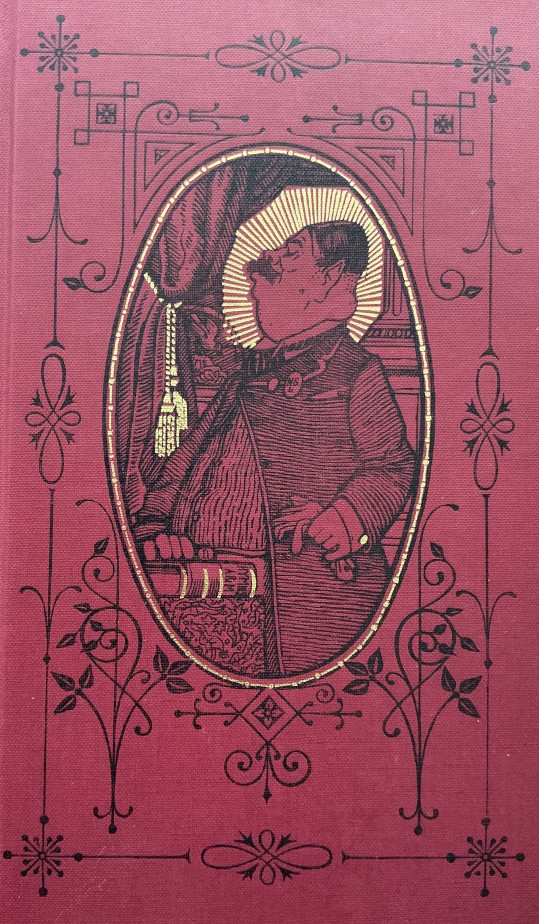
Augustus Carp Esq by Himself (Henry Howarth Bashford)
Well, here is an odd one. The fictional autobiography of Augustus Carp, which is actually the work of Sir Henry Howarth Bashford, is not only remarkable as a wonderful satire of certain social mores of his time (it was first published in 1924) but something that, given Bashford’s other publications, now seems to have come from out of nowhere given that his focus had previously been on his professional medical career.
There is an argument that Augustus Carp Esq might well have gone largely unnoticed but for the efforts of Clockwork Orange author, Anthony Burgess who, in the mid-1960s, lobbied his publisher, Heinemann, to reissue the book. The republication and the revelation of who the author was, seemed to uncork the book’s potential and popularity, attracting admirers like Robert Robinson, Frank Muir and Kenneth Williams.
If you are fond of the earlier work of George and Weedon Grossmith – Diary of a Nobody – or some of the writing of Jerome K. Jerome, you might be tempted to think that the astonishingly pompous, self-regarding, morally questionable, bullying, social climbing Augustus comes from the same stable – but this is only partly true. The key difference here is that Jerome and the Grossmiths are metaphorically winking at us in a knowing way, inviting us into the laughter. But Augustus Carp’s autobiography never cracks a deliberate smile, it plays the whole game straight and the subject never deviates from his sense of righteous self-regard. This solemn, po-faced accounting of his life seems to sharpen the satire and enhance the humour. The fact that the key episodes in his life (and that of his father) are risible and could easily be presented as slapstick in the hands of another author makes the solemnity of the retelling almost painfully funny.
But the satire, like many satires, might divide an audience and this is something that John Letts notes in his introduction to the Folio Society edition:
“Those who have never read it will either hate it or love it. Those who love it will find it impossible to read with a straight face.”
Well, I have to say that I definitely come down on the side of loving it and I’m inclined to go along with Anthony Burgess’s judgement that “(T)he book you have in your hands or hand or on your knee is one of the great comic novels of the twentieth century.”
Augustus Carp is a monster created in part by his monstrous (and litigious) father who navigates his way through life by taking on the mantle of the great opponent of sin and rising professionally not by his intelligence but by exploiting the sins and peccadillos of those who are more influential than he is. Carp and his father mercilessly exploit the wife and mother who they treat little better than a drudge or slave (although she will ultimately have her revenge) and their general level of misogyny is genuinely breathtaking but something Carp presents as entirely normal.
I’m not going to rob you of the pleasure of discovering the set-piece events (and humiliations) of Carp’s life here by describing them in a way that does them little justice outside of the context of the whole but I will recommend the book to you and finish with another spot-on quote from John Letts that will send you off to the book in the right mood:
“From the first word to the last, we are treated to a blandly complacent resume of his life on earth by a monster of priggishness, who presents himself without the faintest sense of humour, and who marches ponderously through the minefield of a dismal and cheerless life beneath a carapace of self esteem and self justification..”
Definitely a book not to be without. Plenty of paperback editions are available online for very little money – so there’s no excuse.
Terry Potter
January 2026