Inspiring Older Readers
 posted on 20 Jan 2026
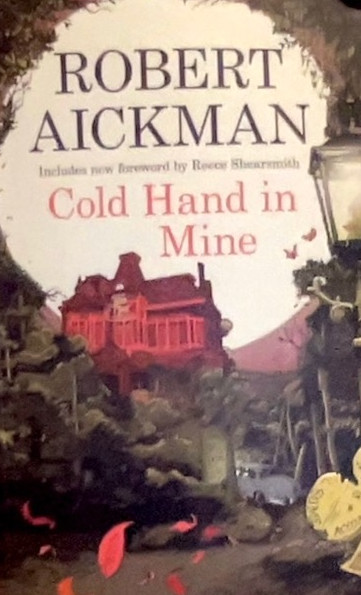
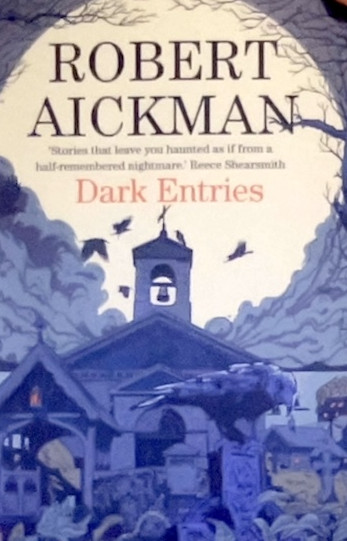
Dark Entries & Cold Hand in Mine by Robert Aickman
M.R. James wrote several brief pieces about what he considered the necessary conventions of the ghost story or supernatural tale. The ghost story itself ‘is a slightly old-fashioned form’, he wrote, and works most effectively if its setting ‘has a haze of distance about it’, its details built up naturalistically with ‘some deliberateness in the telling’, and without too much sensational or blatant horror.
One writer who obviously took James’s advice to heart is Robert Aickman, the short story writer and anthologist whose work has enjoyed a resurgence in popularity over the past decade thanks to Faber’s reissuing of his four short story collections in 2014 to mark the centenary of his birth, and his work being championed by contemporary writers and producers, such as Reece Shearsmith, (Inside No. 10 and The League of Gentlemen). As well as writing short stories Aickman edited seven volumes of the Fontana Book of Great Ghost Stories from the mid-60s to the mid-70s. (In a fittingly odd touch he was also co-founder of the Inland Waterways Association, serving diligently as its first chairman and headquartering it in on the top two floors of a rather fine Georgian house – his own flat, in fact – at 11 Gower Street, Bloomsbury. He rather liked the self-chosen title he had printed on his cards and letterheads – Founder of the Inland Waterways Association – and the fact that he and it shared an address.)
Aickman’s stories were recently recommended to me and I bought the first two collections reckoning that they would make ideal winter reading. (I’m sure M.R. James must also say somewhere that such stories are best read in the winter.)
While Aickman seems to follow M.R. James’s words of advice scrupulously, his stories are far from being conventional Jamesian hauntings. Aickman preferred the term ‘strange stories’ and they are certainly that – mysterious, the ordinary built up in meticulous (even pedantic, pedestrian) detail before a chilling sometimes barely explained strangeness asserts itself. A characteristic of his stories is that when you begin one it is quite hard to tell whether it is going to conform to a recognisable genre. In fact, they rarely do: you would struggle to say, ‘Ah, this one is an undead story, that one is a ghost, this one is a vampire story.’ But many share a weird, claustrophobic nightmare quality.
There is a particular tone to the authorial voice too: almost always middle or upper-middle class, despite sometimes being compromised by being down-at-heel or having to do unpleasant work. And it is more or less impossible to say when each story is set; they could be taking place at almost any time from, say, the 1920s to the 1970s – a feeling heightened by the fact that Aickman’s prose is of an almost Edwardian formality, loaded with archaisms and studiedly old-fashioned usage. (Which doesn’t always work, incidentally, and sometimes his prose seems merely congested or clumsy rather than ‘antique’ and imposing, which I think is the intention.)
But a bigger fault – at least to my mind: others will of course think differently – is that the stories are extremely uneven. For example, in the first collection, Dark Entries, the best story by far is Ringing the Changes – his most anthologised story, as it turns out, and perhaps his masterpiece. But the other five stories don’t begin to approach the quality of that one. A Choice of Weapons seems too evidently indebted to fairy stories; The Waiting Room is inconclusive and rather peters out, and The View – which is a rather good idea – seems carried out at tedious length with not quite enough in it of fright or strangeness or the macabre or whatever it is we need in order to remain gripped by such stories. Anyway, you get the idea: they’re uneven.
In the second collection, Cold Hand in Mine, the opening story, The Swords, is superbly strange – sufficiently so in fact to make me remember that I had read it when I was a young teenager, approaching sixty years ago. But then in this collection too there is a steep dropping off in the quality of the stories that follow.
My disappointment with these stories is all the sharper because I really thought I was going to love them and find them perfect for the time of year. The two collections I have so far read each contain a single genuinely remarkable story, but if the truly excellent stories really do only occur once or twice per book, then this suggests that of the forty-eight short stories Aickman wrote there may only be enough really first-rate ones to make a single small collection.
But perhaps I am judging them over-harshly and should also bear in mind what M.R. James himself said about analysing such stories: ‘I see no use in being pontifical about it,’ he wrote. ‘These stories are meant to please and amuse us. If they do so, well; but, if not, let us relegate them to the top shelf and say no more about it.’ Whether I will ever read enough of Aickman’s remaining stories to test my theory remains to be seen. I would like to think that I will.
Alun Severn
January 2026