Inspiring Older Readers
 posted on 08 Feb 2026
Portrait of a Village by Francis Brett Young
It would be hard to imagine an author more out of fashion than Francis Brett Young (29 June 1884 – 28 March 1954). He was a popular and prolific author, especially in the inter-war years of the 20th century, and gained a degree of fame for his series of linked ‘Mercian novels’ that were all set in the West Midlands and Welsh Borders. Young was a native of that area having been born in Worcestershire and educated at Birmingham University. Prior to his career as a writer he had trained as a doctor but his experiences in WW1 effectively put an end to his medical career and also sowed the seeds of the ill-health that would eventually lead to his move to South Africa in search of a more beneficial climate – and where he finally died. His remains were returned to the UK where they were interred at Worcester cathedral.
I will be honest and say that I would probably not have given Young’s 1937 novel. Portrait of a Village a second look had it not been for three things that piqued my interest: the village Young imagines is fictionally located very close to where I’ve now lived for over 20 years; the book contains the first commissioned woodcuts by the wonderful Joan Hassell; and, it is rather handsomely bound in its first edition state.
More on the book and its illustration later but it’s best to deal with the content first. The book is indeed a novel but it presents itself as a rather nostalgic set of factual reminiscences of Worcester country life in a small, isolated village – Monks Norton – whose linage stretches way back. This isn’t the first time he’d used this technique of creating a fictional village to stand for some large universal truths he wanted to highlight but, as his introductory words tells us, this is a writing trick that can come with problems:
“Some years ago, when I published a book called This Little World, I was assured, by a multitude of correspondents, that they knew not only the village of which I had written but the people whose portraits I had essayed. Needless to say when I wrote it, I had no actual village in mind; and never in my life have I been so foolish as to write of living people. It is the same with Monk’s Norton. I take this opportunity of declaring that no village like it has ever existed outside my imagination; that the people whom I have devised for its habitation are, equally, wholly imaginary.”
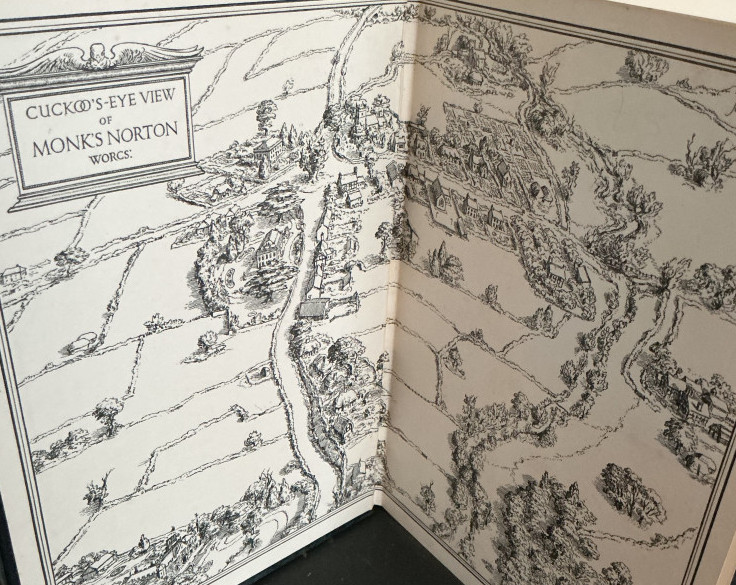
Young takes us on a birds-eye view of Monks Norton, creating for us its history, buildings and some of the key characters and you mentally settle in for what might be a rather bucolic, sun-tinged ‘olde-England’ portrait of a village which laments a lost England. And, in a way, that’s what you get but it comes in a package that’s a whole lot more spikey than you might expect – there are some telling comments about the loss of traditional skills and the incursions of technology on making craftsmen redundant. Monks Norton, we discover, is lost in a world that’s increasingly connected – even the trains pass it by and stop nowhere near. Ultimately, will there be any more reason for people to build a life in Monks Norton in the future, or will they leave just as the migrating birds will at the end of summer?
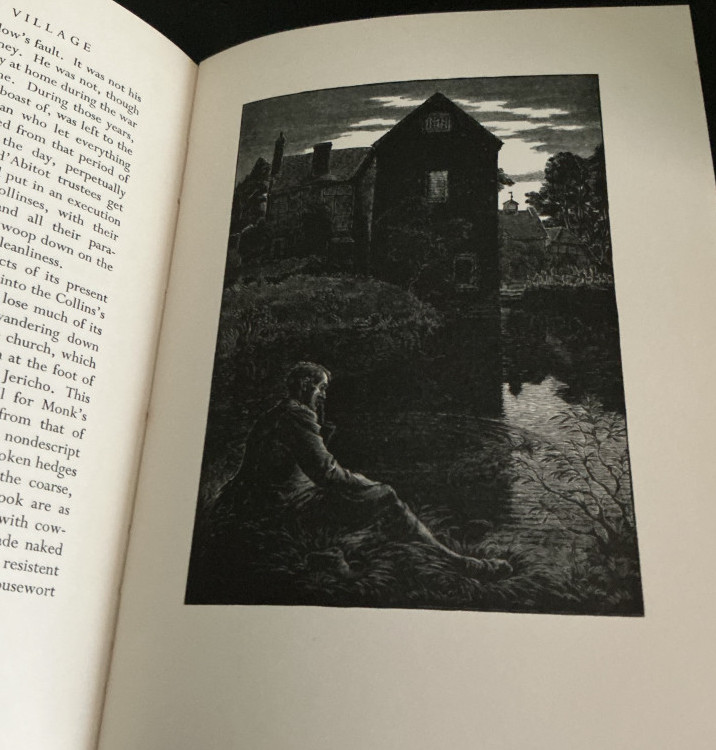
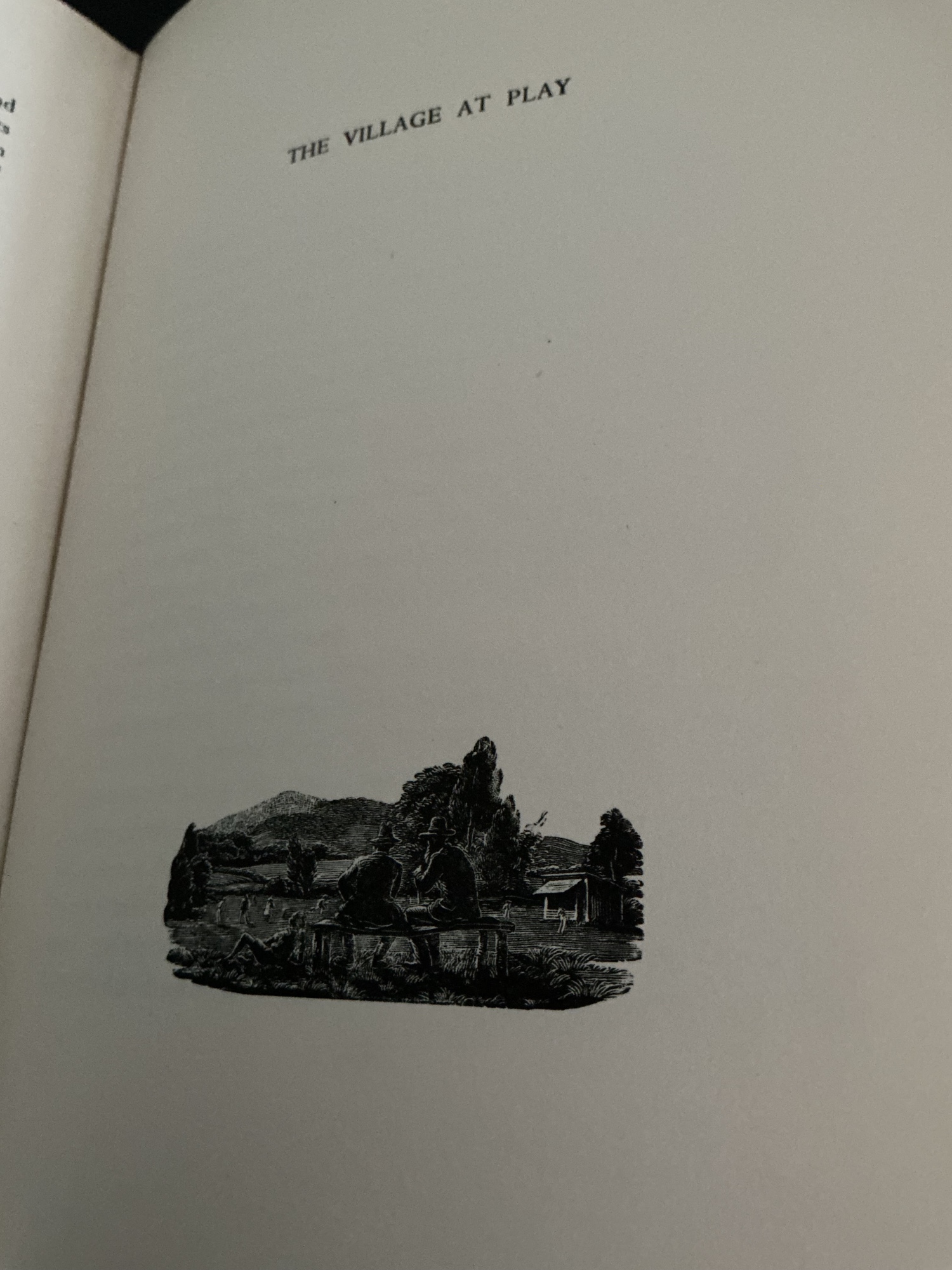
An interesting but not top-drawer novel is raised to something a little better by the thirsty excellent full and part-page wood engravings from Joan Hassell, here completing her first full commission. I’ve written before on the website about my admiration for her work and there are certainly those who are better judges than I am who believe her work on Portrait of a Village was amongst her very best.
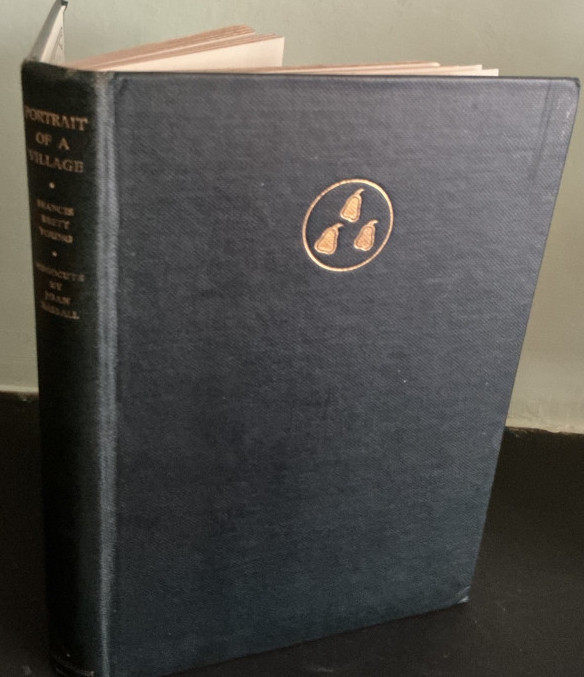
The overall package comes in a beautifully bound first edition volume produced by Heinemann that is printed and sewn on rich, creamy off-white paper and cased in deep green cloth boards with the title embossed in gold on the spine. The front cover shows the simple device of three pears enclosed in a circle – the county symbol of Worcestershire.
You’ll find copies of this for as little as £10 on the internet – a reflection of just how out-of-fashion Francis Brett Young remains.
Terry Potter
February 2026