
Inspiring Older Readers
 posted on 17 Mar 2026
No Jacket Required
Collectors can be a funny (peculiar) bunch of people. Whatever they collect they seem able to generate odd, obsessive targets for their acquisitive impulses – the thing itself is never enough, you also must have all things associated with the objects of desire.
Book collectors are, naturally enough, no different. One of the more bewildering aspects of book collecting to most ordinary members of the public who don’t share the intoxication, is the fetishisation of the paper book jacket. I count myself a modest book collector but even though I spend a lot of time searching for books I want to read and keep, I am still amazed by the level of importance given to the paper book jacket. How is it possible to explain that the existence of the jacket in good order can sometimes add astonishing amounts of value to any collectable – sometimes doubling or tripling what collectors will pay. This is a state of affairs most easily illustrated by the case of F. Scott Fitzgerald’s novel, The Great Gatsby:
And it’s also true that publishers have recognised the value of the eye-catching dust jacket in terms of its advertising potential and have invested significant amounts of money in commissioning some of the very best artists and graphic designers to produce jackets that are nothing short of minor pieces of timeless art.
But it wasn’t always so. The dominance of the paper book jacket that we recognise today and which has become so iconic on hardback books, really only begins in the inter-war years of the 20th century. Prior to that, the dust jacket was a humble item that very much lived up to its name.
The dust jacket started life as a simple plain wrapper designed to protect the cloth or leather-bound book whilst in transit. The new owner would dispose of the wrapper when the book was shelved, hopefully having prevented scuffs or inadvertent stains from damaging the item it was protecting. A beautiful book wasn’t beautiful because of its jacket, it was beautiful because of its binding.
The spread of affordable hardcover books to a wider audience also brought with it a demand to make the books more distinguished, more colourful and more displayable. The ability to print onto the cloth covers or to tool and work the leather bindings allowed publishers to bring in designers and artists who would give their books beautiful and alluring covers – often ones that would be a ‘taster’ for the kind of illustration and embellishments the reader would find inside. And with this advancement, the paper jacket that was still meant to be taken off and disposed of, also grew more decorative and acted more as an advertising banner.
The step to creating a jacket that would be kept on the book – effectively making it part of the ‘book experience’ – and moving away from the expense of decorating the cloth or leather covers of the book itself must have seemed like an obvious one for publishers to make.
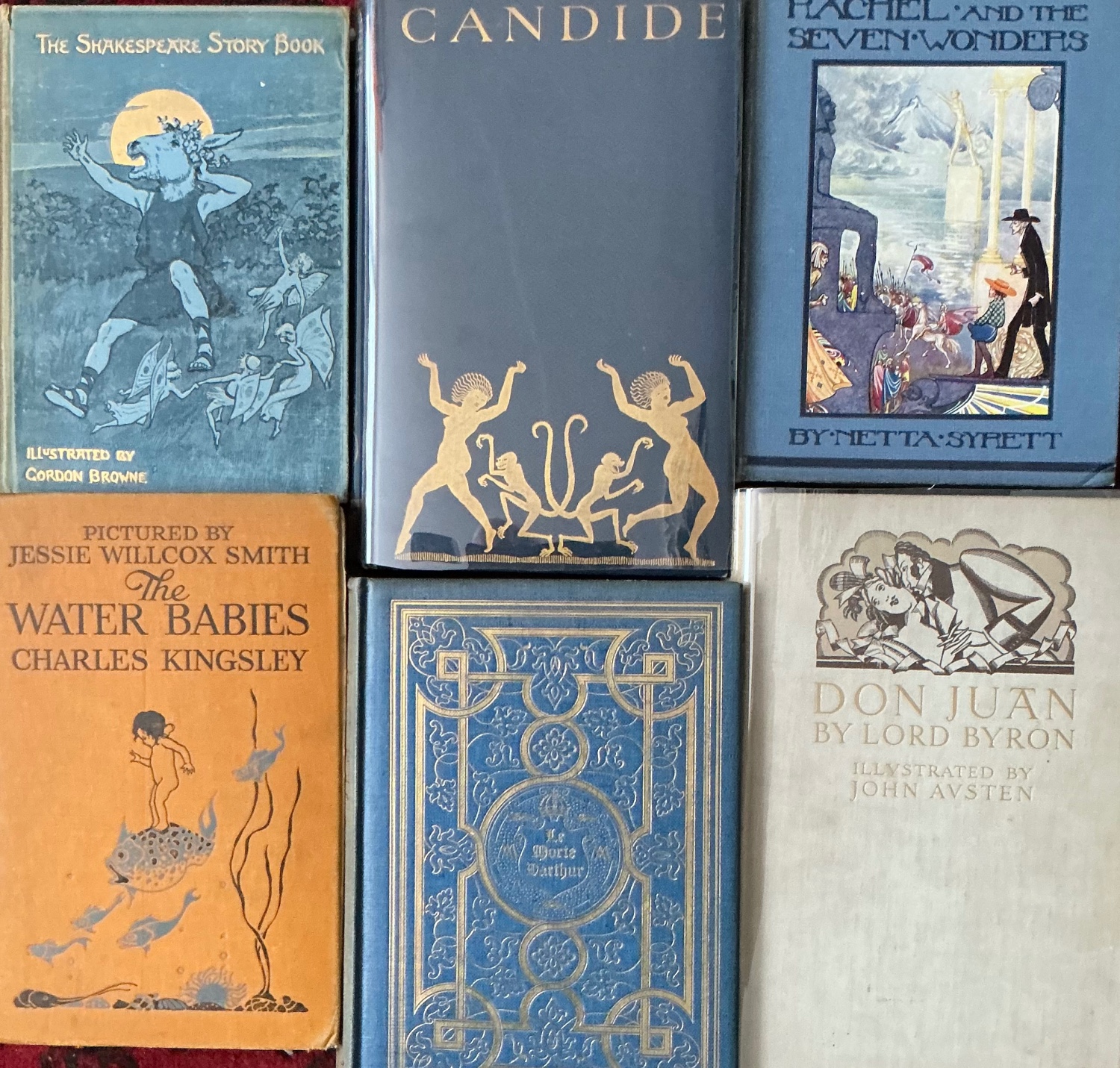
That does, however, leave us with a generation of books that are beautiful to look at once the jacket was disposed of as had been expected. A trip to a decent second hand bookshop that has some older books from the end of the 19th and the first quarter of the 20th century will give you the chance to see some really excellent book cover art. The Victorians in particular had an astonishing penchant for over-embellishment and while some of that works wonderfully, they also loved cheap bulk reprints that are alluring enough at first sight but which provide cover for books themselves that are on horrible cheap paper, printed appallingly and which have bindings seemingly held together by spit, glue and hope.
So, you have to be careful – but lovely things are still out there that demonstrate that if you want a beautiful book, a jacket is not always required.
I have seen evidence over recent years of publishers beginning to decorate the cloth covers of their books again, despite the fact that they have the printed dust jacket on them too. I think the understanding that a book needs to be a beautiful object however you choose to keep and display it has been driven by the emergence of the ebook, which briefly threatened to eclipse the real-world paper version. Publishers are increasingly selling an object of desire and not just a book and, whilst there’s plenty about that which makes me uneasy, the return of the decorated book cover can only be a cause of celebration.
Terry Potter
March 2026