
Inspiring Older Readers
 posted on 26 Mar 2026
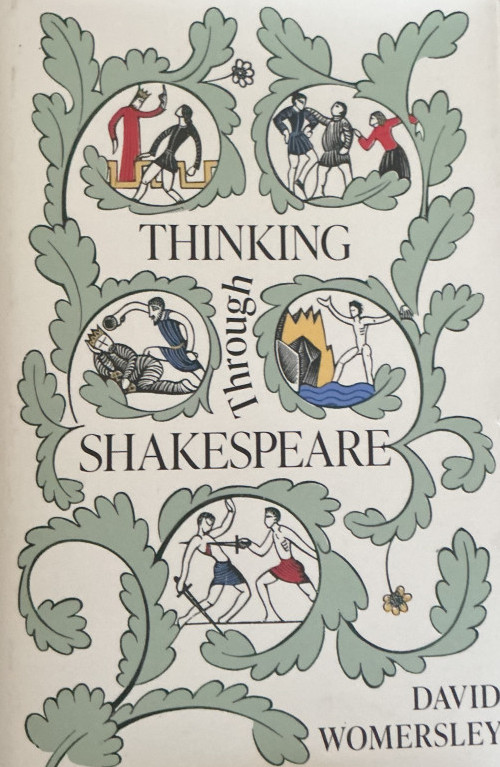
Thinking Through Shakespeare by David Womersley
There can be no other area of literary study that is richer and more copiously stocked than the body of critical appreciation that has grown around the works of Shakespeare. Whole libraries can be filled by those seeking to interpret and comment on the plays and poems – and now here is another to add to shelves: Thinking Through Shakespeare by David Womersley, the Thomas Warton Professor of English Literature at the University of Oxford. But before you throw up your hands and ask why we need yet another study, let me reassure you that this one blows through like a breath of fresh air and brings a different and much missed perspective to the Shakespeare studies debates.
In many ways Womersley’s intention is not revolutionary but more an attempt to reclaim an approach to Shakespeare that has become unfashionable. The author’s starting point is Samuel Johnson’s evaluation of why Shakespeare should be considered important:
“(He) is above all writers, at least above all modern writers, the poet of nature; the poet that holds up to his readers a faithful mirror of manners and of life.”
This idea that there is something universal about the issues Shakespeare showcases, issues that relate to the very nature of what it means to be human, is an assessment that held sway, Wormersley claims, until the second half of the twentieth century when what he calls ‘high theory from the social sciences’ took centre stage. This challenged the notion of ‘universal’ issues and questioned whether ‘social-constructed fiction’ was in fact a product of ‘dominant, oppressive, usually male, western European, and white interests.’
But Wormersley’s intention here is to reclaim the position Dr Johnson postulated and add to it. In his own words:
“I am trying to do something different. I am trying to reconnect Shakespeare’s plays to the abiding concerns of thoughtful people – concerns which, in a variety of shapes, seems to have formed part of our ‘general nature’ since the earliest antiquity.”
But importantly he also says:
“…the contention of this book is emphatically not that Shakespeare possessed any timeless esoteric wisdom that he wished to impart through a theatrical medium. It is rather that, in his hands, drama became a forensic instrument whereby such issues might be probed and rival views about those set in motion.”
So how is the book structured? Without wishing to suggest that these are the only or most important issues, he explores four perennial human problems: personal identity, the distinction between civilization and barbarism, the relation between political power and religious authority and the tension between means and ends. Womersley starts by thinking through the history, philosophy and politics of these problems, from antiquity to today, and looks at how Shakespeare presents them in the great tragedies —Othello, Hamlet, Macbeth and King Lear. And, although these plays take centre stage, many of the other plays are referenced along the way.
I can do no better in recommending this book than to quote the book’s flyleaf blurb which, I think, admirably captures why Thinking Through Shakespeare is a worthy addition to the Shakespeare library:
“By revealing in new ways how Shakespeare’s plays are animated and driven by central human problems, and why he should again be viewed as the great poet of human nature, Thinking Through Shakespeare opens up a richer understanding and appreciation of his work.”
The book is available now from Princeton University Press and can be obtained from your local independent bookshop – who will be happy to order it for you if they don’t have it on their shelves.
Terry Potter
March 2026