
Inspiring Older Readers
 posted on 14 Apr 2026
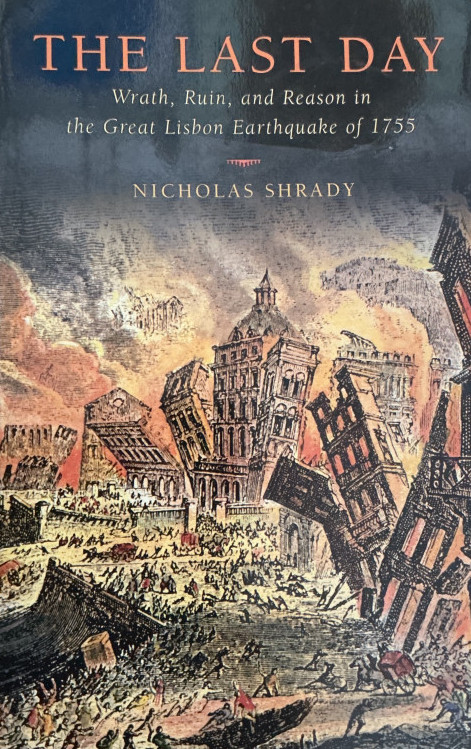
The Lisbon Earthquake by Nicholas Shrady
I must admit that I have had a very odd perspective on the terrible earthquake that all but destroyed Lisbon in 1755. To be more accurate it was, it turns out, not just the multiple earth tremors that did the damage but the accompanying tsunamis and out-of-control fires that turned one of Europe’s major port cities to rubble. But I only really knew about it from the references made to the event in late 18th and early 19th century literature. Until I read Nicholas Shrady’s book I really didn’t appreciate the human devastation and tragedy that the event occasioned.
In 1755, Portugal and its capital, Lisbon was at the very heart of mercantile Europe and had grown wealthy and, some argued, complacent with its position. But in some ways Portugal had become something of an outlier because a fanatically austere Catholic church kept a stranglehold on all aspects of life and fiercely resisted the ingress of humanist or progressive secularism.
But as is true of fanatics of all stripes, being more pious than anyone else wasn’t enough and the population were regularly reminded of their sinful state. So, when on one otherwise calm morning the earthquake struck, there was general consternation over what this could mean. How and why would God be punishing those who were so dedicated to upholding His truth? Was there some deep-seated corruption or moral degradation that had bought this down on them or was this, as philosophers across Europe had begun to speculate, proof positive that there was no God and that man was on his or her own?
The Last Day explores all of these questions in an engaging and highly readable way. We are taken through the initial shocks, the follow-up, even more destructive quake, the tsunami and fires and we are left contemplating a death toll and fall of buildings that we might now think of as similar to the extremes of modern warfare. We’re taken through the religious and philosophical debates that spread across a disbelieving Europe, shown how this found its way into the literature of the time and finally shown how recovery was masterminded.
One figure stands out in the renaissance of Lisbon, Sebastiao Jose de Carvalho e Malo – the incoming Secretary of State who became the ultimate mover and shaker when it came to the city’s reconstruction. He was an astute politician who was able to get things done and make enemies in equal measure. I guess no-one who can manipulate power as he obviously could, is likely to be delicate or sensitive but despite the fact that he was clearly not a man to cross, it’s impossible not to admire what he did.
Shrady concludes the book with what he interprets as the universal message from an event that happened almost 300 years ago and concludes:
“Natural disasters are revolutionary. The manner in which a society interprets a catastrophe and responds to the chaos exposes many of the accepted truths, prejudices, hopes, and fears of a culture suddenly and inexplicably confronted with ruin.”
I’m afraid the book in hard or paperback is quite hard to find and can be expensive unless you shop around.
Terry Potter
April 2026