Inspiring Older Readers
 posted on 28 Apr 2026
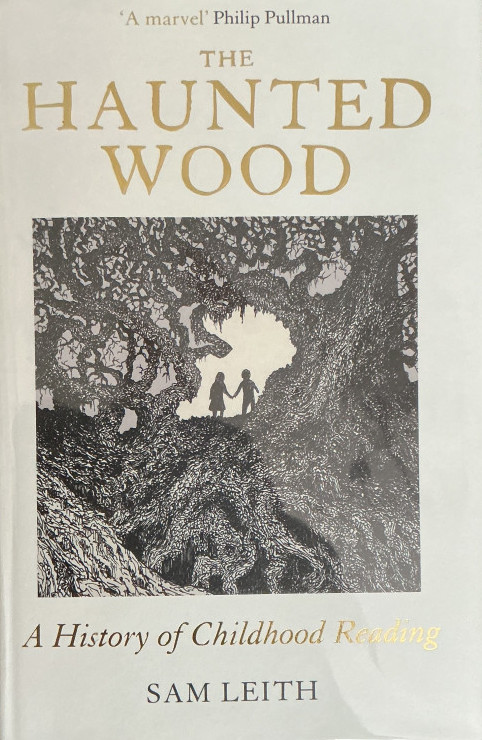
The Haunted Wood: A History of Childhood Reading by Sam Leith
A 600 page book about the ‘history of childhood reading’ might strike you as a pretty daunting thing to take on. Such huge slabs of paper seem to signal that a hard slog is at hand: but, on this occasion, if you come to Sam Leith’s book with such expectations then you’re going to be very pleasantly surprised. Yes, it’s scholarly; yes, it’s brilliantly and thoroughly researched; and, yes, it can be challenging and iconoclastic but the one thing it isn’t is hard going. Quite the opposite, because here’s a chronological journey through the origins and growth of what we call ‘children’s literature’ and by the end it’s a rich and complex look at books that can be read just as much by adults as by younger readers. It’s a case of showing that where books are concerned the old adage that age is just a number seems to hold true.
If any of you have read Katherine Rundell’s seminal long essay, ‘Why you should read children’s books, even though you are so old and wise’ (reviewed on this site in 2019 here) you’ll understand exactly the moving spirit behind Leith’s work. The two writers clearly share a vision in common: that the subject matter of the very best children’s writing and story telling is about the essential issues of what it means to be human and, as Rundell puts it:
“Children’s books are specifically written to be read by a section of society without political or economic power.”
Leith is also quick to remind us that ‘children’s literature’ is ostensibly for children but not by them. From the great classics to the cartoon silliness of some picture books, they are all written by adults – adults driven by a range of their own complicated motives and issues in the ‘real world’.
And Leith himself says:
“For the adult reader or, perhaps more pressingly, the adult writer, the imaginative spaces of children’s stories represent negative liberty: freedom from. Freedom from adult responsibility, freedom from loss and sorrow, freedom from the drudgery of the workaday round.”
The book is broken into separate substantial chapters that take periods of time chronologically and looks at the key books published during these times. In most cases each period of time gets one of its major texts analysed. Of course, there will always be titles that don’t get included as ‘important’ or noteworthy which you as the reader may take issue with and, yes, there is, unapologetically, a bias and focus on British writing but I’d be really surprised if you didn’t recognise the key landmark books that Leith picks out and digs into at depth.
In every section there is something to delight you – my favourite is the section that covers Lewis Carroll where he perceptively (and I think correctly) likens Alice in Wonderland’s position in the children’s literature canon to that played by Laurence Sterne’s Tristram Shandy in the evolution of the adult novel. Excellent stuff.
I’m nerdy enough to have read the book from cover to cover but its structure allows normal people to dip in and out at different points depending on their interests but be aware that once you’re in it’s pretty difficult to loosen its grip.
You may be tempted to wait for a paperback to show up but, on this occasion, I’d suggest that the hardback will serve you better because you’ll want to be in and out of it all the time and the boards are more robust.
Terry Potter
April 2026