
Inspiring Older Readers
 posted on 23 Aug 2026
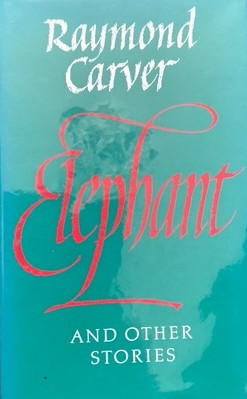
Elephant and other stories by Raymond Carver
Over my long years as a compulsive reader, one genre that I’ve always struggled to fully appreciate is the short story. For some reason I’ve never really felt comfortable with them – I never could quite reconcile myself to the idea of them coming to an end just as you settle into them or, sometimes I’m left wondering why they even happened at all.
Lovers of the short story format would tell me that it’s an art that demands special skills and that the short story writer – and reader – has to approach the creation of their condensed gems in a very different way to the bigger, more sprawling full-length narratives. But while I could intellectually understand these points, I never could quite switch my reading mentality in such a way that I was eager to pick up short story collections.
That’s until recently. Over the past couple of years the light bulb has started to glow, sometimes dimly but sometimes it shines with full force. Discovering the short stories of Raymond Carver is as startling as switching on a searchlight, so intense is the experience.
Carver, born in Oregon in 1938, died at the tragically early age of 50 in 1988 from lung cancer after producing five short story collections (in his lifetime) and half a dozen books of poetry. Critical opinion often comes down on the side of his 1983 title Cathedral as his strongest collection but there’s also a significant lobby in favour of Elephant and Other Stories, which was his last published work in the year he died.
It’s often quite difficult to capture just what it is that makes a writer like Carver achieve such a powerful and visceral impact on his readers. His stories attract words like ‘minimalist’, ‘lucid’, ‘blue-collar’, ‘enigmatic’ – I could go on but I think you probably get the drift. He writes with genuine empathy about the pain, loss and humiliation of losers who just keep on losing – the title story in Elephant is a perfect example of this – and he does it in a way that in some mysterious way seems to dignify their loss. These are crafted requiems for the outsiders.
It’s certainly true that the wellspring for much of his material is semi-autobiographical – alcohol addiction, grim poverty, unemployment and emotional betrayal all feature. It’s also true that the perspectives are very male-centric and that the prose rather mirrors that but that just feels honest in the context of his themes.
This is the landscape of six of the seven stories in Elephant and you will discover your own personal favourite. I was trying to think of what I could come up with to give you a flavour of these stories without spelling out the plots of them (you’re quite capable of reading them for yourselves) and the best I can come up with is that they feel similar in atmosphere to that which you might experience in viewing the paintings of Edward Hopper – which I realise might not help too much if you’re not familiar with Hopper!
What might help more is if I quote from the profile of Carver in The Guardian in 2008 (no author credited):
Carver’s reputation has continued to grow since his death. His characters – beleaguered, inarticulate and weary – are living against the tide: they struggle to exist in the present, away from the future worries and past regrets that threaten to destroy them, but it is always a losing battle. And yet, no matter how chaotic the lives he delves into, Carver’s work has a dazzling lucidity. He exposes the most telling details with a surgeon’s precision and sureness of touch, and sees straight to the fragile hearts of his characters without ever becoming sentimental.
Concise and exactly right. I can’t really add to that…
Paperbacks are available and should cost you under £10.
Terry Potter
August 2026