
Inspiring Older Readers
 posted on 04 Oct 2026
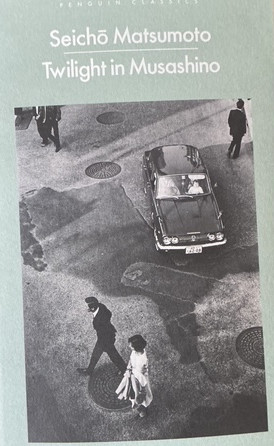
Twilight in Musashino by Seichō Matsumoto
When I reviewed Seichō Matsumoto’s Inspector Imanishi Investigates on this site back in 2024, I said that fans of detective fiction might have to adjust any expectations that they may have around notions of pace, plotting and character development – Matsumoto’s novels require you to approach them with a very different eye. This is a message that is worth bearing in mind if you pick up his 1960 novel, Twilight in Musashino.
Only translated (by Jesse Kirkwood) and published in this single volume for the first time by Penguin this year, Twilight is a crime novel that is structured like nothing I’ve read before in the crime genre. It is, in many ways, two novels existing interdependently and married together. In the first of these we get a detailed and painstaking description of the crime: we know the perpetrator and we understand both the motive and the impact it has on everyone the crime touches, how the victim became a victim and how, psychologically and motivationally the killer became a killer. In the second half we step out of that world and we enter the world of the police detectives and journalists trying to untangle the puzzle that we’ve just witnessed being created. Given our privileged possession of knowledge about the crime, we’re able to watch all the errors, missteps, wrong assumptions, evidence breakthroughs and eventual ambiguous resolution.
I’m acutely conscious of the possibility with books that are based around the unfolding of a complex puzzle that a review which tells you too much about the plot will dilute the reading experience – even when the identity of the killer is never really hidden. So in order to give you a flavour of the plot and still retain plenty for you to discover for yourselves, I’ve relied here on the book blurb from The London Review Bookshop to do the job for me:
“Musashino, 1959. A young Japanese flight attendant is found strangled on the icy banks of the river. The police suspect foul play – but the deeper they dig, the more they collide with a wall of silence.
At the centre of it all stands a foreign priest and the Guglielmo Church, a charitable Christian mission. The dead woman’s connection to the church is undeniable. But what begins as a routine investigation quickly turns into something far more treacherous, entangling together narcotics, post-war relief schemes and the delicate web of international diplomacy.
As the story moves from back alleys to diplomatic sanctuaries, following the twists and turns of Detective Fujisawa’s investigation, Seicho Matsumoto masterfully constructs a slow-burning procedural where truth is clear but justice is not permitted.”
What that very helpful summary does it to emphasize the way in which Matsumoto’s novels capture something essential about the chaos of post-war Japanese society and its uncomfortable accommodation with Western ‘occupation’. It’s no coincidence that all the main-movers in the corrupt, corrupting and criminal world that we are introduced to are Westerners – whether they are out-and-out crooks or drug barons or misguided religious zealots. It is the Japanese themselves who seek to find justice and it is telling that they are denied this seemingly at every turn as the protective tentacles of ‘diplomatic’ procedure enslave them just as effectively as a physical enemy occupation.
I can’t deny that some readers might pick up this book and quickly decide its plot development is too slow and that they don’t have the patience for the best part of 450 pages – but I honestly think they’d be making a mistake. The carefully plotted layers of this story build with tension in their own way and the prose writing is delectable (a nod here to the translator, I think). Don’t think of it as a detective novel just think of it as a novel.
Terry Potter
September 2026