Inspiring Older Readers
 posted on 22 Oct 2026
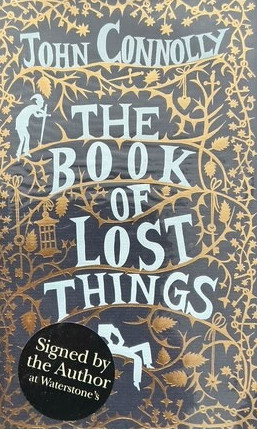
The Book of Lost Things by John Connolly
John Connolly’s reputation is probably strongest amongst aficionados of the fantasy/horror genre and when The Book of Lost Things was released in 2006 it was hailed by the publisher as something of a departure, a new path, for Connolly. So, what was it that justified the notion that the well-established author was exploring something very different?
Well, I think it’s a question of audience. As Colin Greenland rather astutely notes in his 2006 review for The Guardian:
“Who is this book for? Generic boy hero, schematic adventure plot, heavy-handed explicatory narrative tone: all would try the patience of any reader no longer juvenile. Yet the material is as grim as Connolly’s customary horrific fare. The torture chambers, martial dismemberments and surgical miscegenations, the continual nervous drift towards themes of sexual corruption: all firmly indicate adults only.”
I think this crossover position between young adult and adult might have felt much more puzzling to the reader in 2006 but I can’t help but feel that what seemed a bit of a odd muddle of intentions back then, no longer feels quite so outlandish. The blurring of lines between adult/young adult has become increasingly porous and the fact is that very little of the ‘horror’ felt very horrific to me as I read this for the first time. I have been far more taken aback by the work of Darren Shan, for example and Penguin even has advertisements for teen horror slasher books. Cultural norms have shifted significantly, not least under the influence of video games, and what once felt delicate territory for the teen audience, no longer has the ability to shock in the same way.
Connolly’s own website describes the set-up in this book with suitable concision:
“David is alone, with only the books on his shelf for company.
But those books have begun to whisper to him in the darkness, and as he takes refuge in the myths and fairytales so beloved of his dead mother he finds that the real world and the fantasy world have begun to meld. The Crooked Man has come, with his mocking smile and his enigmatic words: ‘Welcome, your majesty. All hail the new king.’
And as war rages across Europe, David is violently propelled into a land that is both a construct of his imagination yet frighteningly real, a strange reflection of his own world composed of myths and stories, populated by wolves and worse-than-wolves, and ruled over by a faded king who keeps his secrets in a legendary book:
The Book of Lost Things.”
Using twisted, dark takes on traditional fairy stories isn’t necessarily the most original of ideas but it does provide a suitable framework for the traditional quest narrative. But what I’m interested in is whether there’s a nugget of truth in Greenland’s view that the book is written in a heavy-handed explicatory narrative tone. Whilst I do understand the point he’s making, I also think he overstates the case – the book has a pace, a degree of narrative drive that just about overcomes some of the clunking mechanics of the construction and I think you really do start to care about David and the situations in which he finds himself. Where I think Connolly scores is in resurrecting the sheer horror and jeopardy that was in fact commonplace amongst original story collectors like the Grimm brothers.
And what about the adult/young adult issue? Well I’m not sure there’s much milage left in this: it’s a book that can be read comfortably by adults and older teenagers and that all you need to know really because, crucially, it would work for either.
Readily available in paperback, it won’t cost you a fortune to discover your own take on the book.
Terry Potter
October 2026