Inspiring Young Readers
 posted on 12 May 2026
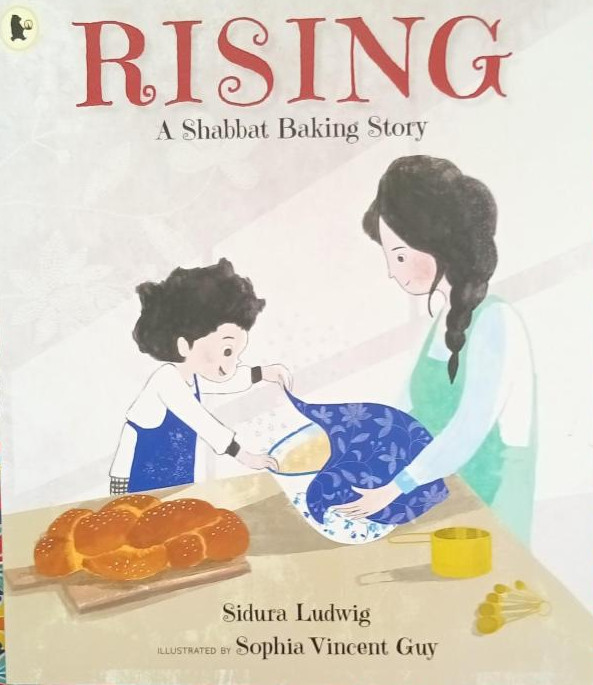
Rising: A Shabbat Baking Story by Sidura Ludwig with illustrations by Sophia Vincent Guy
This is part of what seems to be a developing series from Walker Books celebrating festivals from different traditions, ‘Celebrate and Make’ (you can see our reviews of A Golden Eid and Welcoming the Lunar New Year from the same series).
The mood of the book, as you’d expect given the deliberate restfulness of Shabbat, is much more subdued than either of those. The characters (a child, their parents, their Shabbos guests) are drawn in what looks like pastels, along with the walls, doors, sky and some other surfaces. This produces an appealing contrast with the occasional vivid collage-looking textures of mixing bowls, kitchen tiles, tablecloths, garden flowers and, charmingly, the smell of the bread itself.
There are also similarly textured illustrations of the plaiting of the bread – along with an explanation of the metaphorical plaiting of the other days of the week – which for me conveys something of the synaesthesia of childhood – that the look, smell, texture and meaning of the bread are all bound up together.
This points towards the overall effect of the book, which is almost like an order of service for a younger child participating in the preparations for the Shabbat for the first time. The theological or historical content of the evening is handled with a light touch, and pitched at just the right level for the presumed readers:
“We add a sprinkle of salt for the times we’ve cried, sometimes a dab of honey for the sweet times to come”
There’s not a lot of story – but that actually conveys the mood of the celebration – a Shabbat with a lot of drama wouldn’t be what you’d want. Rather, it captures the quietness and homeliness of the evening – though there are quiet gestures to the diaspora at the end – in one illustration, the father waves off into the night at the (now unseen) departing guests and this coincides with a mention of other people around the world, which is a nicely ambiguous meeting of text and image.
Overall, this would make a nice addition to a Primary School library, along with the rest of the series. Together they would be useful for teachers and classes thinking about a range of different festivals and traditions.
I could also see a family who were introducing their child to Shabbat in general, or specifically to baking Challah, getting some good use out of this, and perhaps coming back to the book for quite a long time and getting different things from it as the child aged.
There’s a simple recipe at the back (the ‘Make’ part of the series title) along with a glossary of the Hebrew terms. I’d recommend it for either families or congregations wanting to introduce their own traditions to younger children in a gentle and accessible way or for school libraries looking to broaden their resources for thinking about diverse kinds of celebrations. If it isn’t already in your local independent bookshop, they will be happy to order it for you.
Dan Whisker
May 2026