
Inspiring Young Readers
 posted on 11 Aug 2026
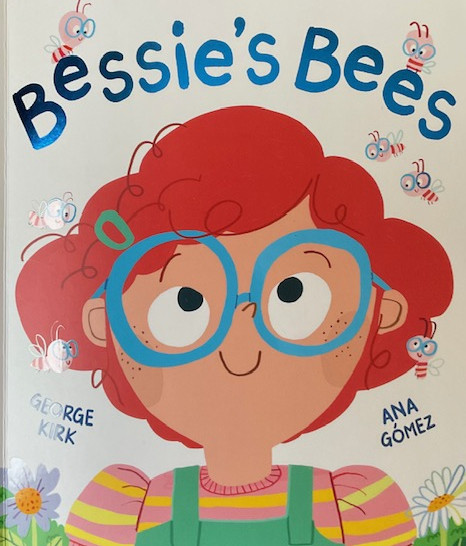
Bessie’s Bees by George Kirk, illustrated by Ana Gomez
Whether or not a child has ADHD or is anywhere on the neurodiverse spectrum, the busy nursery environment can at first be overwhelming to them. My personal and professional experience has taught me that many children thrive in a calm, slowly paced classroom and that they need differing amounts of time to ‘tune in’ to what is in front of them. This can contradict with the noisy, colourful and super stimulating range of activities that defines some early year’s settings, resulting in a sensory overload that can be very uncomfortable, frightening and sometimes painful. I have also had a long academic interest in how various special needs and disabilities are portrayed in picture books, so was very interested to see how this author and illustrator approached the subject, hopefully without it getting in the way of a compelling story.
I immediately liked the appearance of the confident-looking young girl whose smiling face fills the front cover as she looks out at the reader. On the first double page spread we get a sense of her fizzing personality as she prepares for the day. She is shown surrounded by bees because her head is buzzing with excitement which continues as she then runs out into the garden rolling, swinging and exploring everything around her. We then have a glimpse of how hard it is for her to quieten the bees when she needs to go to sleep at night, but Bessie has clearly learnt strategies to control their noise when she is at home.
When she makes her first trip to nursery the following day, everything is much more unfamiliar and challenging. The other children don’t appear to be troubled by any bees and, although she tries hard to keep them in check, their constant buzzing interfere with her concentration and enjoyment. They bounce and zoom around when she is trying to listen to a story and then become really disruptive:
‘The bees skittled dolls and dinos…
They scattered bouncy balls…
And they splattered paints EVERYWHERE!’
The response of the teacher to what is obviously a distressing outburst from Bessie and her bees is to move the other children away and allow her to calm down. It takes the arrival of Granny at home-time to coax the troublesome bees and get them to behave in a more orderly fashion. Whilst I would hope that the teacher would have found ways to reassure Bessie before this, the story gives a strong message about communicating with and working alongside carers to help settle all anxious children into nursery. I intend to use this as a good discussion point with childcare students.
When they are back at home, wise Granny explains that the buzzing bees are part of Bessie’s personality, so she needs to find ways of revealing them when she is at nursery and to explain how she sometimes needs time and space to bring them under control. Once she has realised this, she can tell her new friends how they need to be kept busy in the classroom. When playing outside, the bees sometimes occupy themselves while she has fun with her classmates. Once this is sorted – everybody is just fine.
I strongly recommend this inclusive picture book with a wealth of detailed and colourful illustrations that help to tell the story. An afterword note from the author explains how he had found school very difficult and frustrating due to his own neurodiversity. Published by Templar Books. It should be available from your local independent bookshop, who will gladly order a copy if not already on their shelves.
Karen Argent
August 2026